FitMe
Prototyping & User Research
Project Overview
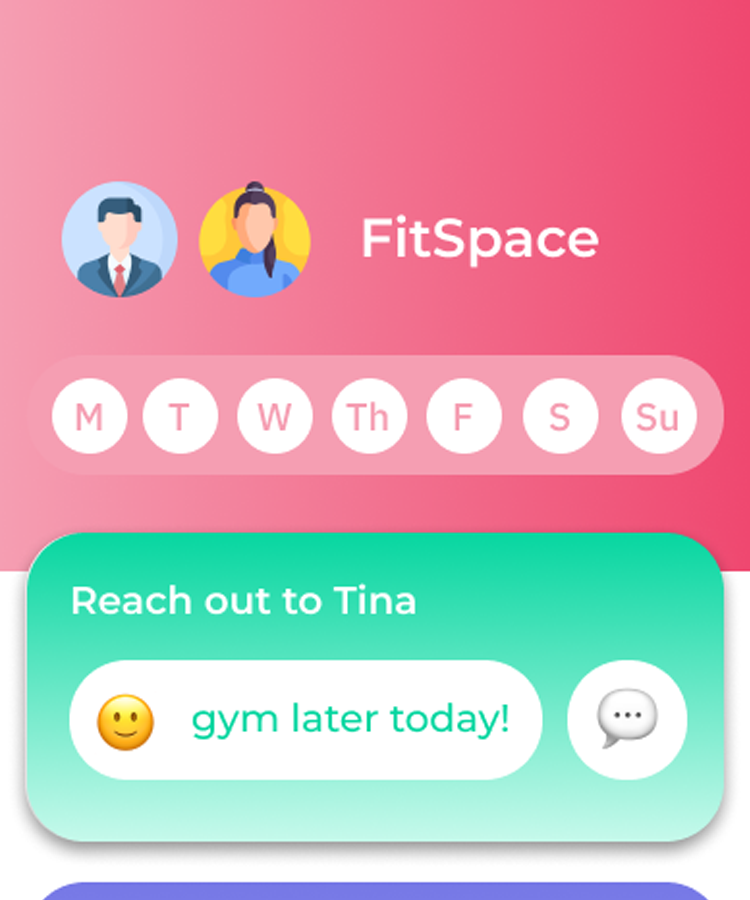
FitMe is a mobile fitness app concept designed to help people find workout partners. Many gym goers struggle with motivation, accountability, or discomfort when attending the gym alone. This is especially true for new gym members or individuals who find it difficult to approach others in person.
The goal of FitMe was to create a product that combines the social discovery mechanics of dating apps with the structure and purpose of fitness. The app emphasizes accountability, shared goals, and consistency rather than romantic outcomes.
Project Scope
Prototyping
User Research
Marketing Strategy
Applications & Tools
Figma
Adobe Illustrator
Duration
Start – October 2022
End – December 2022
Building The Prototype
Objective
Designing a mobile app that helps users find compatible workout partners based on fitness goals, schedules, and location to reduce intimidation and increase accountability.
Problem Statement
Solo gym goers often lack the motivation and confidence to maintain a consistent fitness routine. Without social accountability, it becomes easier to skip workouts or disengage entirely. While dating apps and social platforms exist, none are designed specifically around fitness compatibility and shared workout habits.
The challenge was to design a product that helps users connect with workout partners without replicating the tone or expectations of dating apps. The experience needed to feel supportive, purposeful, and safe.
Users & Audience
The primary users for FitMe include:
-
Individuals looking for a workout partner rather than going to the gym alone
-
New gym goers who feel intimidated by traditional gym culture
-
Users interested in meeting people through shared fitness goals, not necessarily romantic intent
The app needed to accommodate a wide range of fitness experience levels and preferences.
My Role
This project was completed as part of a second year GBDA course and focused on creating a high fidelity product concept. I was responsible for:
-
Framing the market problem and identifying opportunity within the fitness space
-
Defining the core product concept and feature set
-
Designing key user flows and interaction patterns
-
Creating high fidelity UI screens and prototypes in Figma
-
Supporting visual design work using Adobe Illustrator
Design Process
Problem framing and market fit
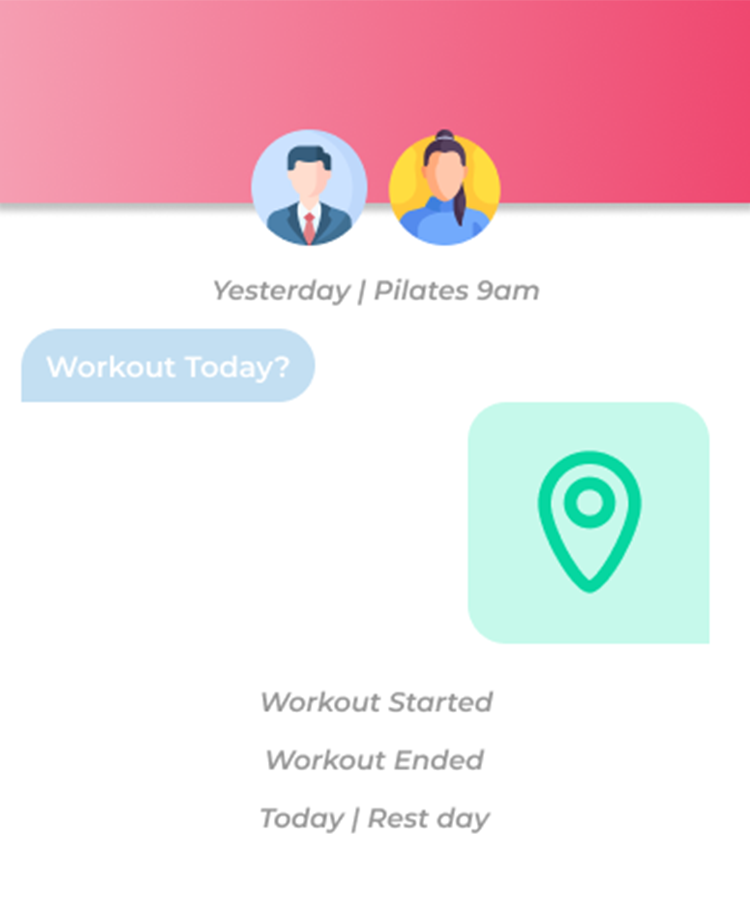
The project began by identifying a gap in the fitness market. While many apps focus on individual tracking or performance, few address the social barriers that prevent people from consistently showing up. We framed accountability as the core value proposition. The idea of “someone expecting you to be there” became a guiding principle throughout the design process.
Matching logic and user control
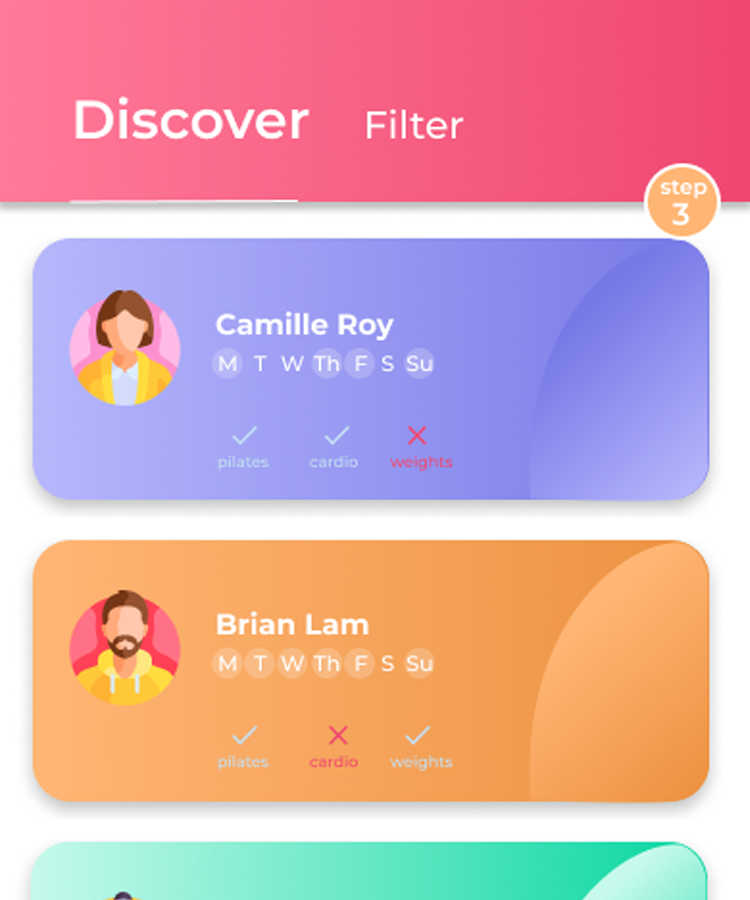
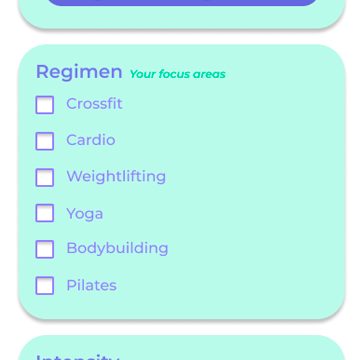
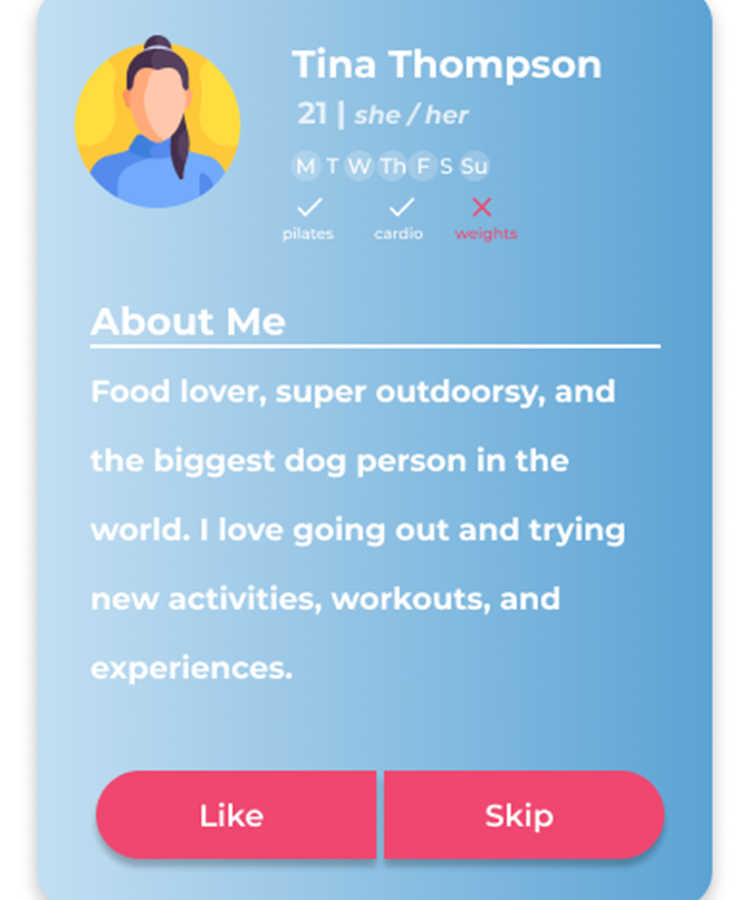
FitMe matches users based on fitness goals, schedules, and location. Users can view profiles that show workout style, preferred gym times, intensity level, and gym location. This reduces uncertainty and increases the likelihood of a compatible match. Users can also filter who they want to work out with by gender, helping limit manual filtering and increasing comfort and safety.
Avoiding dating app stigma
One of the biggest design challenges was avoiding the perception that FitMe is a dating app. While swipe based interactions are familiar and intuitive, the interface needed to clearly reinforce fitness as the primary purpose.
This was addressed by:
-
Emphasizing fitness data over profile photos
-
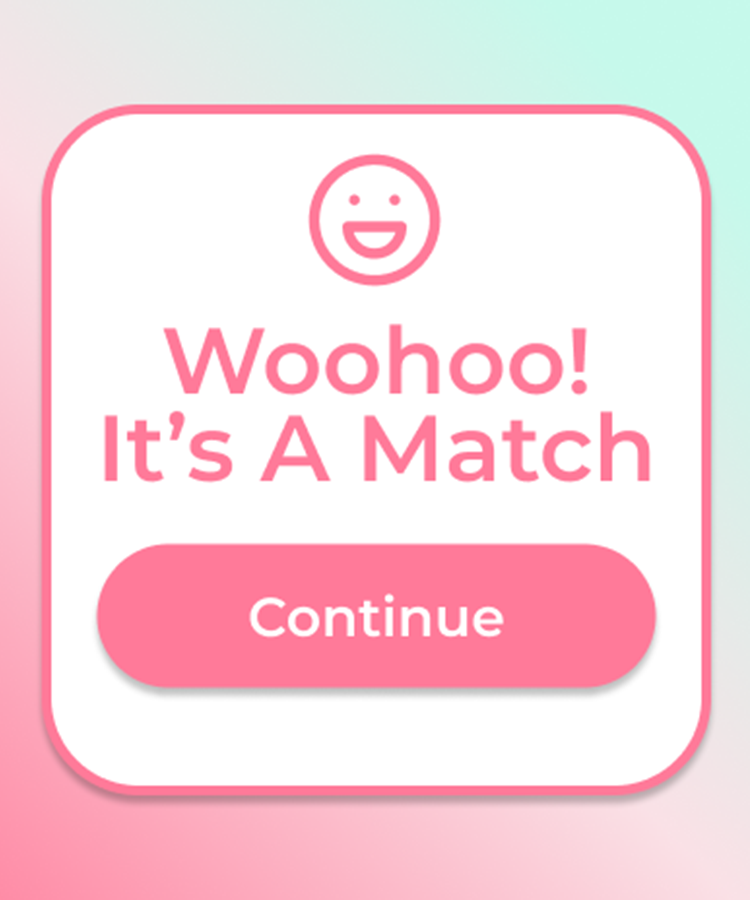
Framing matches around shared goals and schedules
-
Using neutral, activity focused language throughout the app
The interaction design reinforces collaboration and accountability rather than attraction.
Outcome
The final deliverable was a high fidelity prototype that demonstrates how FitMe could function as a real product. While the app was not developed or launched, the design successfully communicates a clear value proposition and addresses a real behavioral problem in the fitness market.
This project reinforced the importance of aligning interaction patterns with user intent. Familiar mechanics can be reused, but only when they support the product’s purpose rather than distracting from it.