
RYDR
Business Modeling & Market Analysis
Project Overview
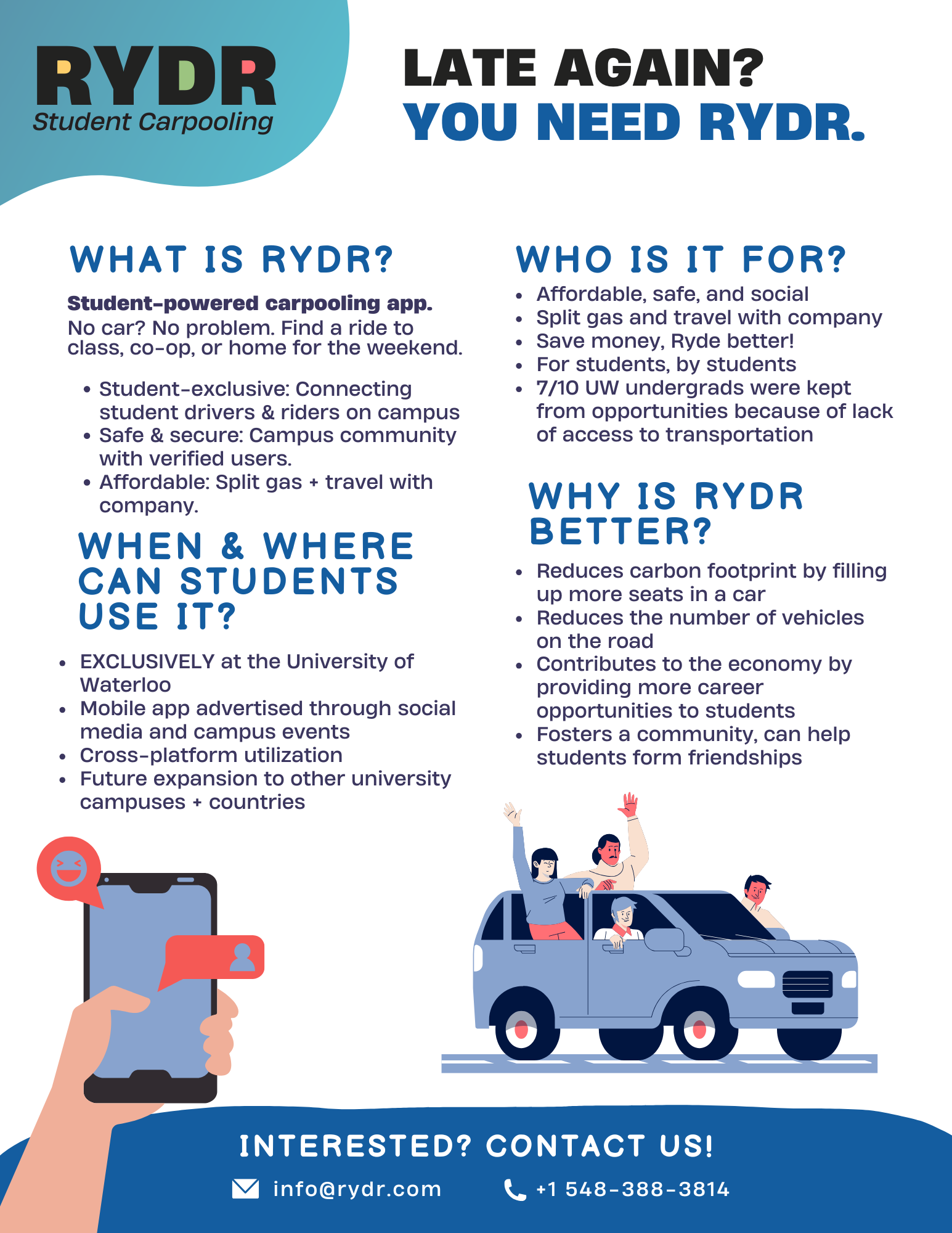
RYDR is a student-led business pitch exploring how a campus exclusive carpooling platform could address affordability, accessibility, and sustainability gaps in student transportation. The concept was developed as part of a group pitch project, where the goal was to identify a real market problem, evaluate its viability, and propose a scalable business solution.
The project focused on understanding student behavior, transportation barriers, and the limitations of existing options such as public transit and ride hailing services. Rather than designing an app interface, the emphasis was on validating the business opportunity and building a realistic model that could operate within a university environment.
Project Scope
Business Modeling
Market Analysis
Growth Planning
Applications & Tools
Canva
Duration
Start - July 2025
End - August 2025
Building The Business Model
Business Problem & Opportunity
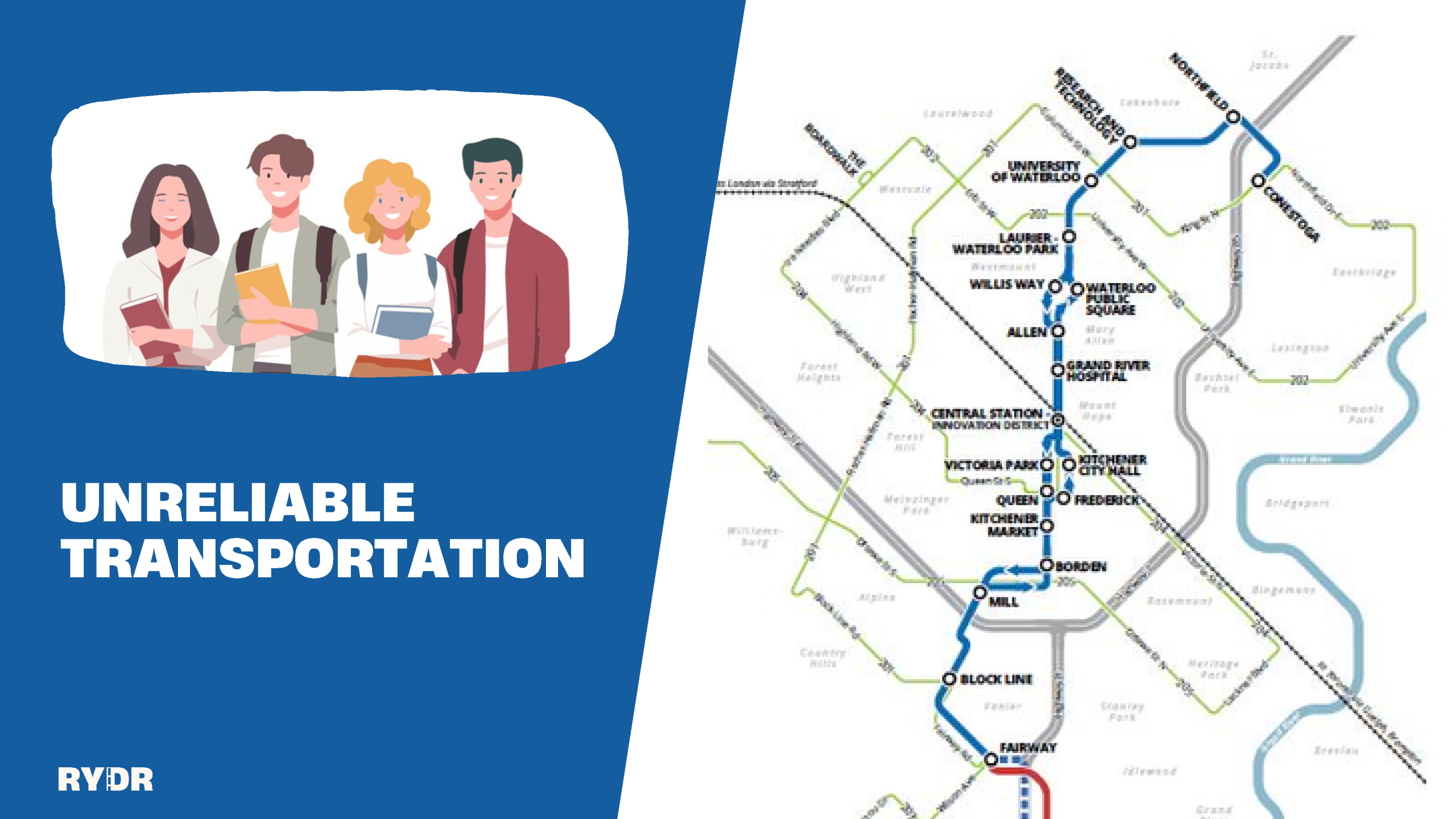
Many university students face limited access to reliable transportation. Public transit does not always align with class schedules, co-op placements, or weekend travel, and ride-hailing services are often too expensive for regular use. For students without access to a car, this lack of mobility can restrict academic, social, and employment opportunities.
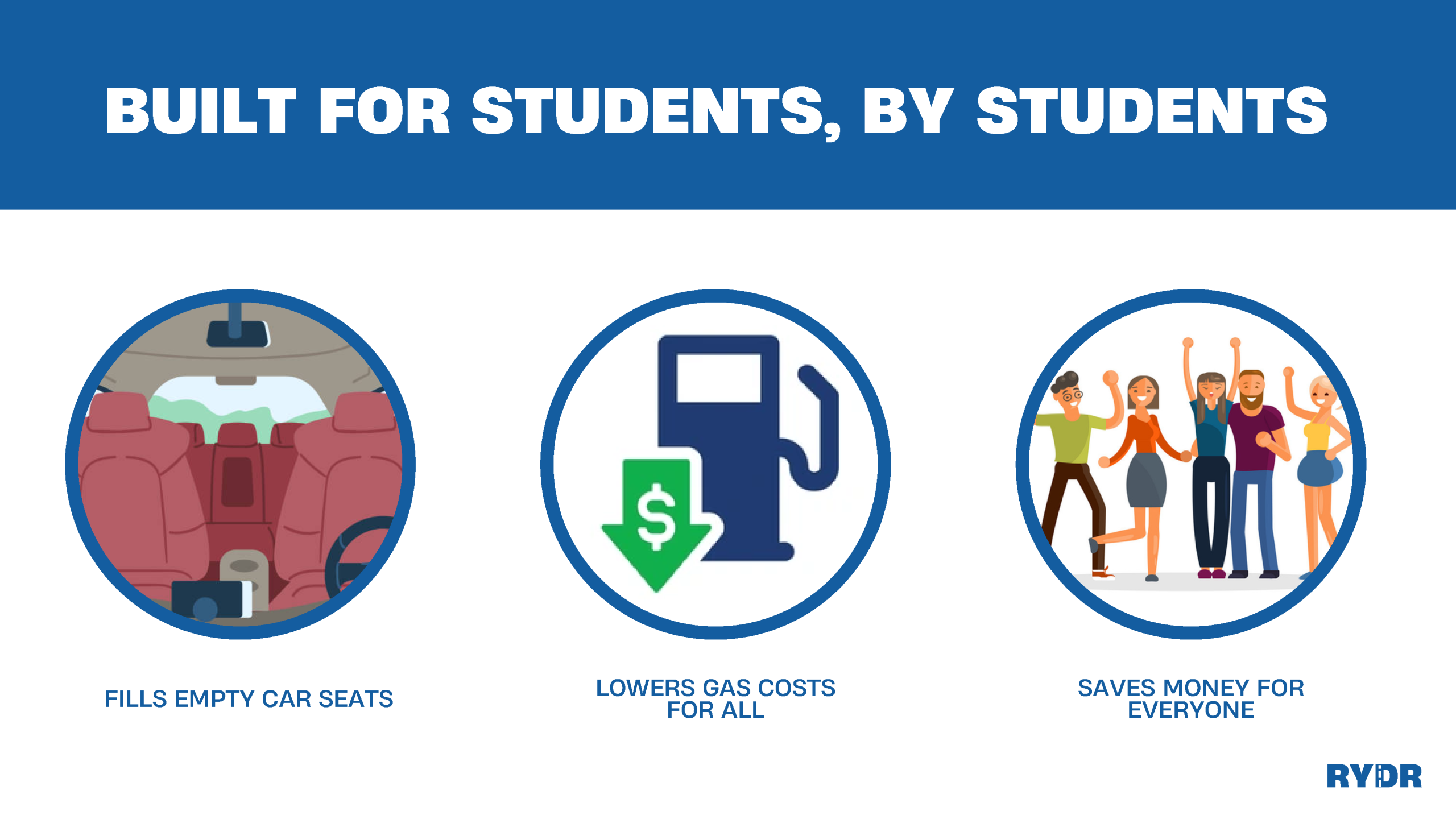
At the same time, many students who do own cars regularly commute with empty seats. This creates an opportunity to better utilize existing resources rather than introducing more vehicles to the road. RYDR was framed around the idea that transportation inefficiency on campus is not a supply problem, but a coordination problem.
Our Solution
RYDR proposes a student-exclusive carpooling platform that connects verified student drivers and riders within the same campus community. The platform allows students to find rides to classes, co-op placements, and weekend destinations while splitting gas costs and travelling with peers.
By limiting access to verified students, the platform prioritizes safety and trust while reinforcing a sense of shared community. RYDR positions itself as a practical alternative to ride-hailing services rather than a replacement for public transit, filling gaps where existing options fall short.
Target Market
The primary market for RYDR is undergraduate students at the University of Waterloo who either:
-
Do not own a car and need affordable transportation, or
-
Own a car and are willing to offset gas costs by offering rides
Secondary users include students travelling to off-campus co-op roles, weekend destinations, or social events where transit options are limited.
Focusing on a single campus first allows the platform to build density, trust, and habit before considering expansion to other universities.
Business Model
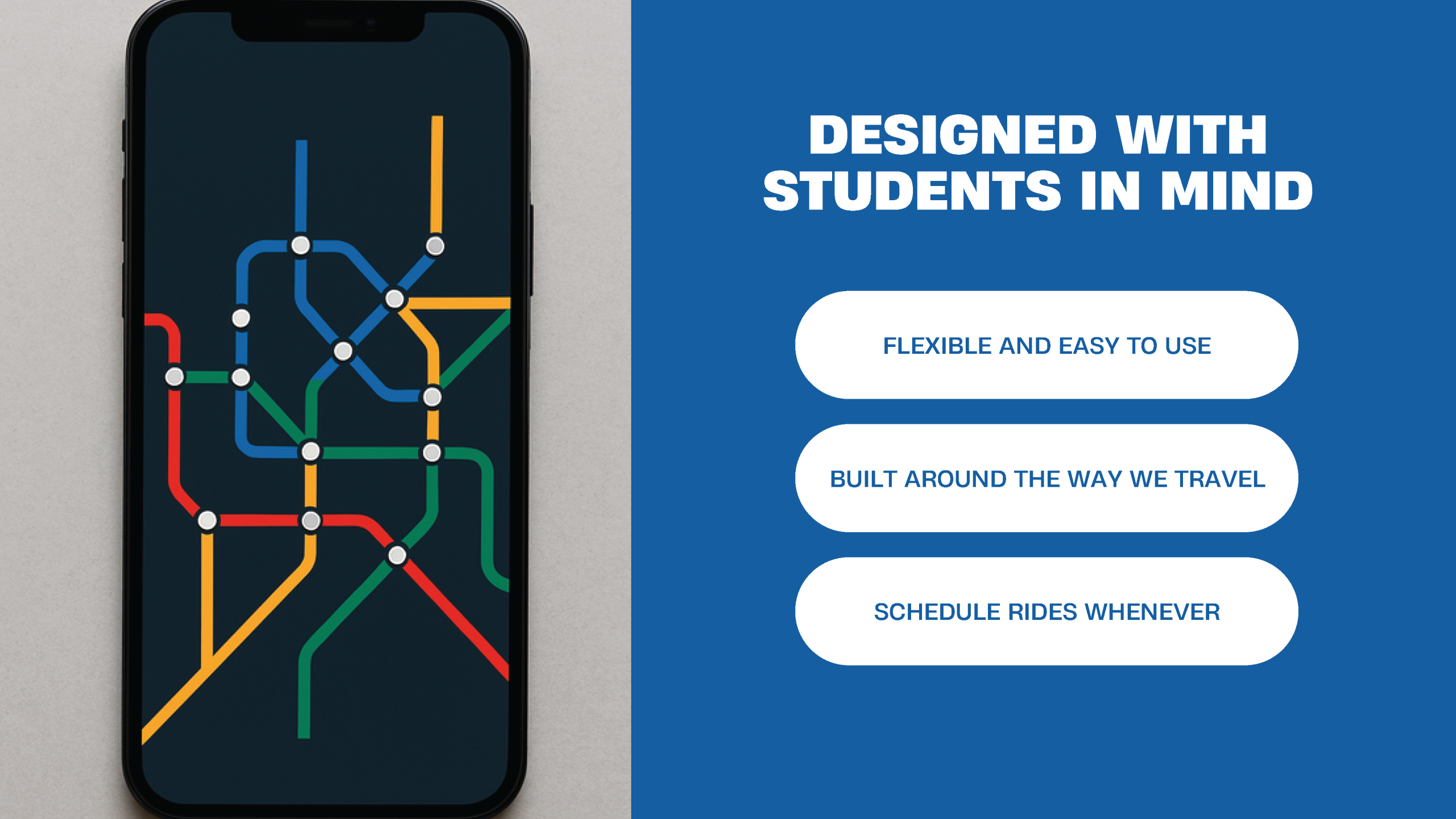
RYDR was designed with a low-barrier adoption model in mind. Rather than charging high transaction fees, the platform emphasizes affordability and participation.
Revenue concepts explored included:
-
Small platform fees per ride
-
Optional premium features for frequent users
-
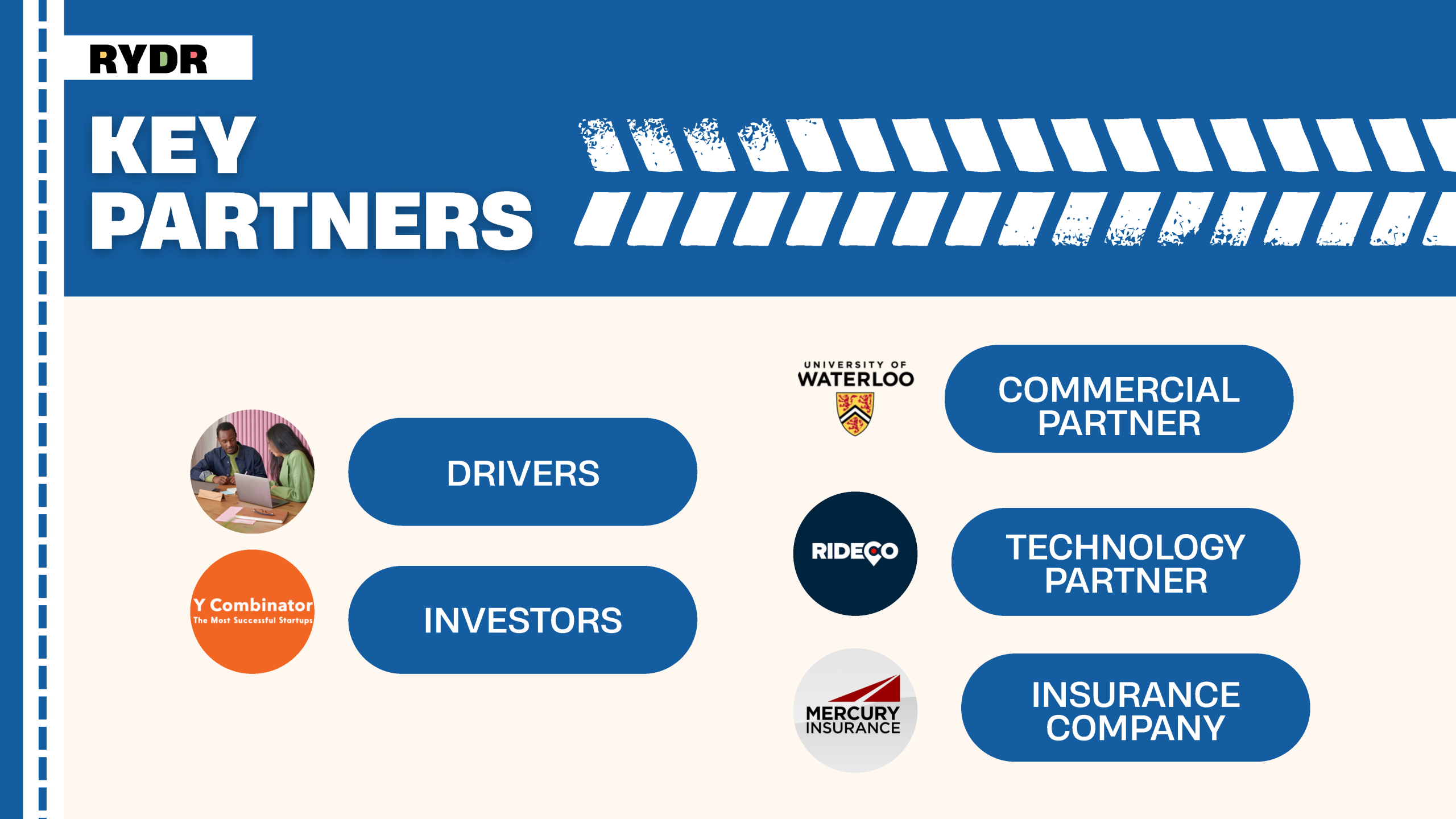
Campus partnerships and sponsorships
Costs were expected to remain relatively low in early stages, primarily tied to platform maintenance, marketing, and verification processes. The model prioritizes early traction and community adoption over aggressive monetization.
Go-to-Market Strategy
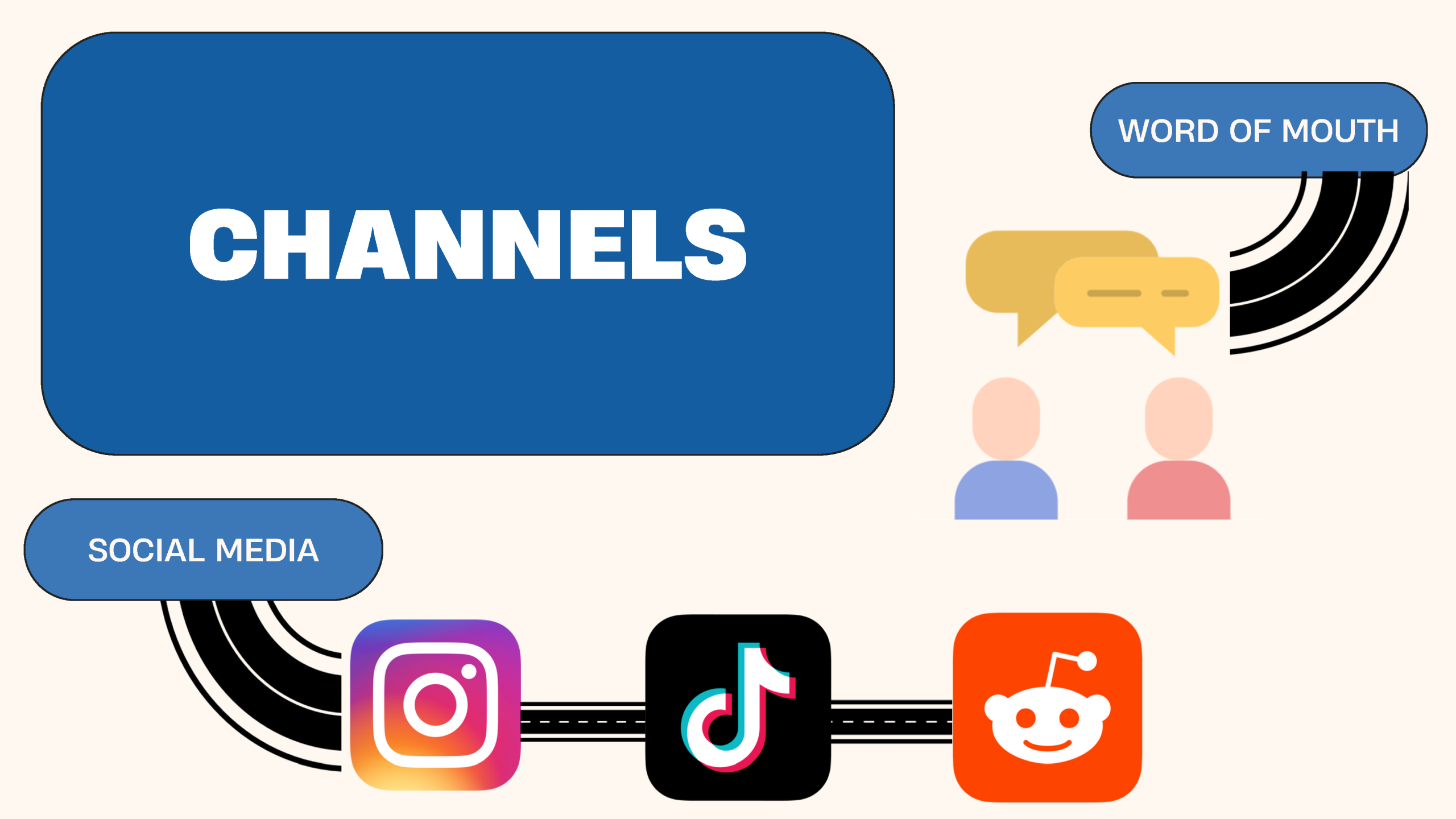
The go-to-market approach centered on campus-specific visibility and trust rather than broad advertising. Key strategies included:
-
Promotion through campus events and student organizations
-
Social media marketing tailored to student schedules and routines
-
Leveraging peer-to-peer sharing and word of mouth
-
Positioning RYDR as “for students, by students”
By embedding the platform within campus culture, the goal was to create organic growth and habitual use.
Why Our Concept Works
RYDR works because it aligns with existing student behavior rather than trying to change it. Students already carpool informally, already split costs, and already rely on peer networks for safety and trust. The platform formalizes these behaviors into a structured, scalable system.
In addition to cost savings and convenience, RYDR also delivers secondary benefits:
-
Reduced carbon footprint by filling empty seats
-
Fewer vehicles on the road
-
Increased access to opportunities for students without cars
-
Stronger social connections within the campus community
These combined benefits strengthen the value proposition beyond transportation alone.
My Role & Contribution
This project was completed as a group business pitch. My contributions focused on the business and strategic framing of the concept, including:
-
Defining the core problem and opportunity
-
Shaping the value proposition and positioning
-
Contributing to the business model and revenue logic
-
Supporting the overall pitch narrative and presentation structure
My work emphasized grounding the idea in real student constraints and evaluating whether the concept could function as a viable business, not just an appealing idea.
Reflection
This project reinforced the importance of starting with behavior and constraints when evaluating new business ideas. A strong concept must align with how people already operate, what they are willing to pay for, and how a solution fits into existing systems.
RYDR strengthened my ability to think through business viability, market entry, and tradeoffs early in the ideation process, before any product or design execution begins.