
Harvest Hands
Organizational Growth
Project Overview
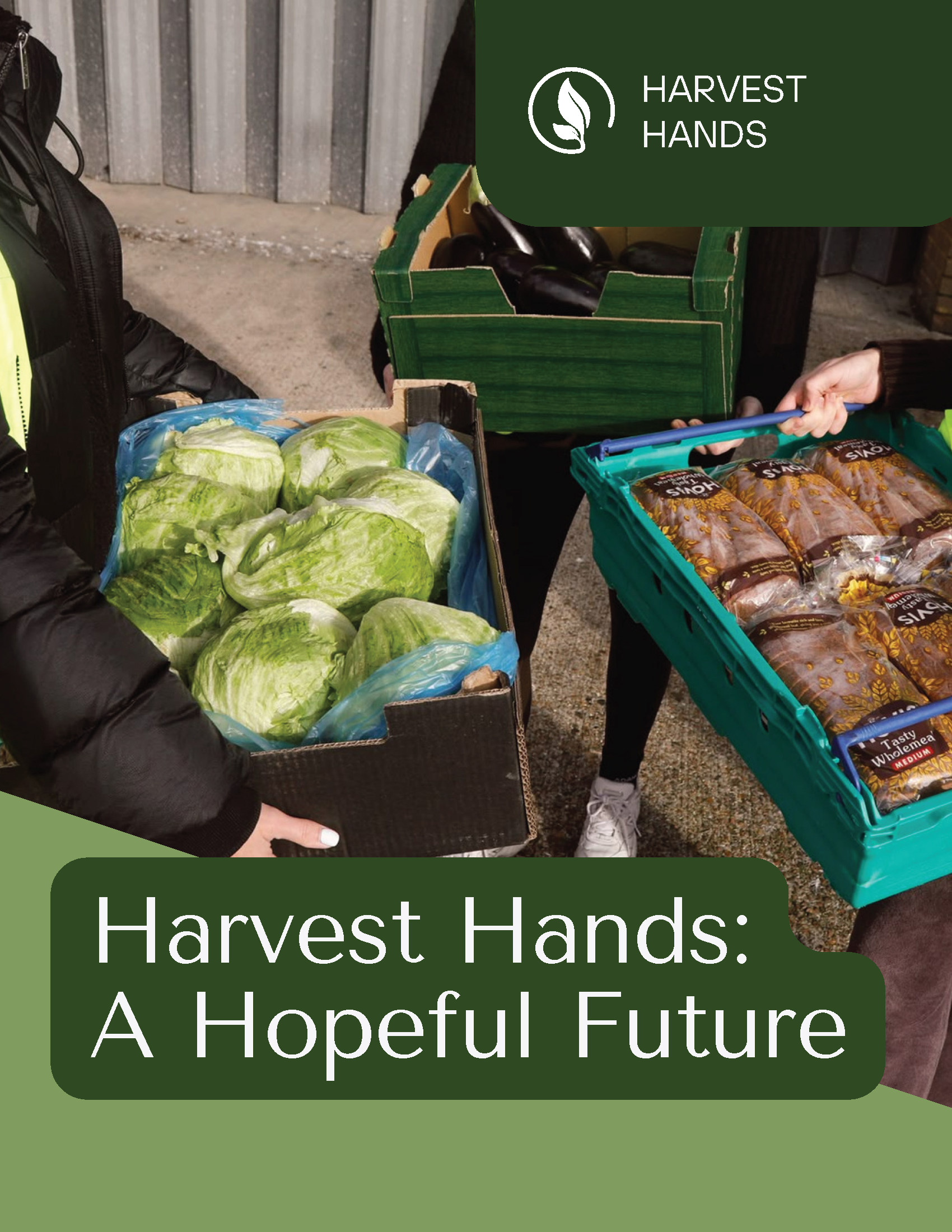
Harvest Hands is a rapidly growing food rescue charity that distributes surplus food to community organizations across Ontario. While demand for its services has increased significantly, the organization’s operational and financial structure has struggled to keep pace.
This case study evaluates Harvest Hands’ growth challenges and explores strategic options that would allow the organization to continue expanding its impact while remaining financially viable and aligned with its mission.
Project Scope
Operational Planning
Strategic Growth
Financial Evaluation
Applications & Tools
Canva
Duration
Start - October 2025
End - November 2025
Analyzing The Business
Objective
Evaluating strategic paths that allow Harvest Hands to scale operations sustainably without compromising financial stability or volunteer capacity.
Business Problem
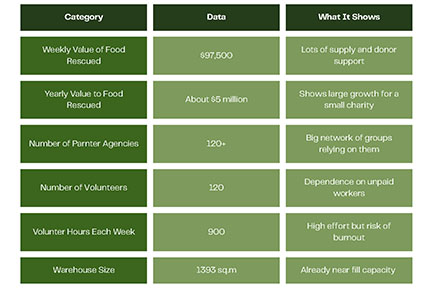
Harvest Hands has experienced rapid growth, rescuing nearly $5 million worth of food annually and supporting over 120 partner agencies. However, this growth has outpaced the organization’s financial and operational capacity. Rising facility and transportation costs, reliance on volunteers, and limited storage space have created structural strain.
Despite strong community impact and donor support, the organization is operating at a deficit, making its current growth model unsustainable over the long term
Context & Constraints
Several constraints shaped the analysis:
-
Financial pressure: Operating expenses significantly exceed revenue
-
Capacity limits: Warehouse space and cold storage are near maximum capacity
-
Volunteer dependence: High volunteer hours create burnout risk
-
Mission alignment: Growth decisions must preserve the organization’s “never say no” philosophy
These constraints meant that aggressive expansion without added structure would likely weaken the organization rather than strengthen it.
My Role
This project was completed as a team-based business case study. My contributions focused on:
-
Interpreting operational and financial data
-
Evaluating strategic alternatives using defined criteria
-
Supporting the recommendation and implementation logic
-
Contributing to the action and execution framework
This work centered on analysis and decision making rather than visual or brand design.
Approach & Business Thinking
Defining Descision Criteria
Before evaluating solutions, we established clear criteria to ensure recommendations aligned with Harvest Hands’ mission and constraints. These included operational scalability, financial feasibility, community impact, and long term sustainability.
This framework helped avoid reactive decisions driven only by short-term growth pressure.
Evaluating Strategic Alternatives
Three primary options were assessed:
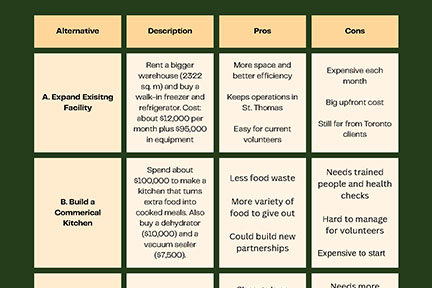
- Expanding the existing facility to increase storage and volunteer capacity
- Building a commercial kitchen to reduce food waste and add value
- Opening a second location near Toronto to reduce transportation costs
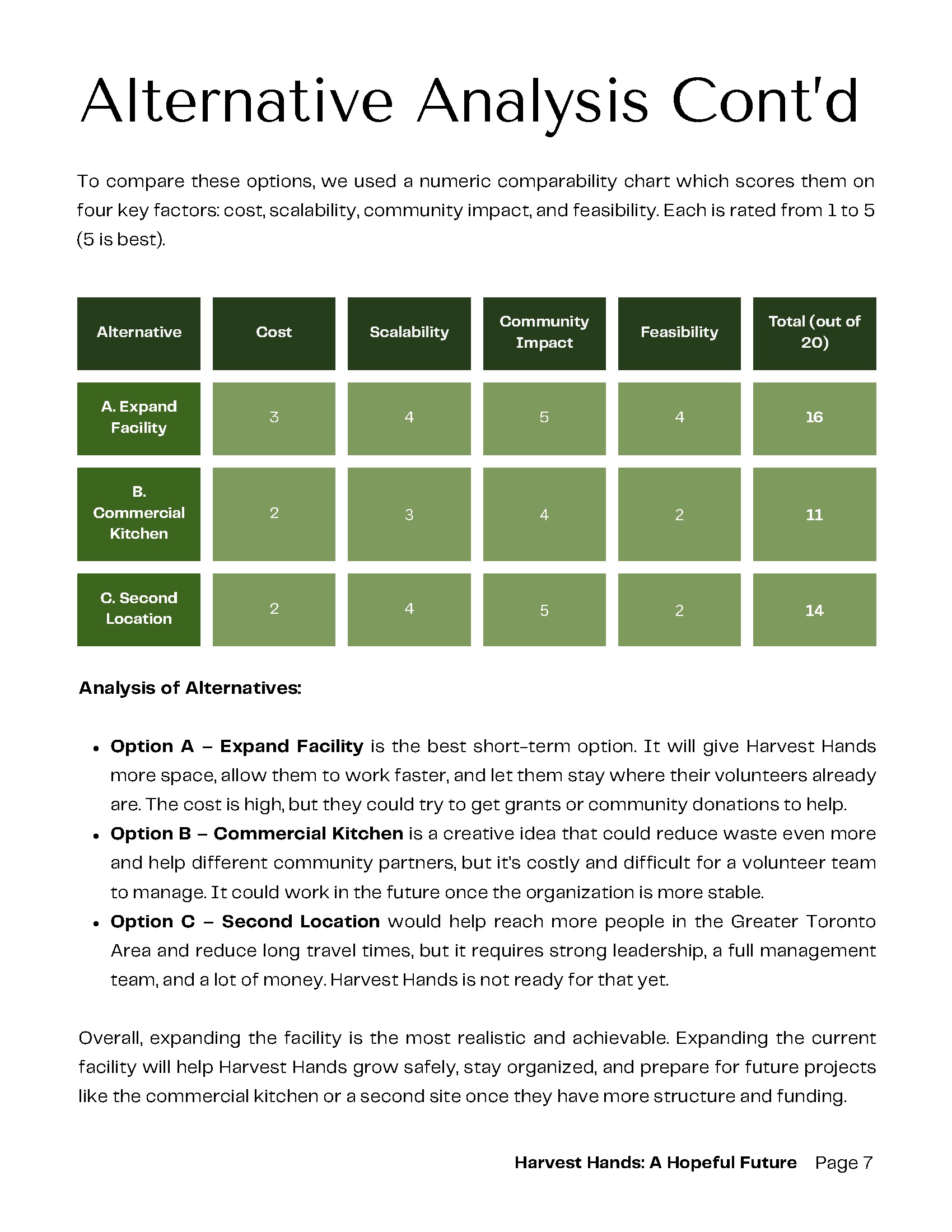
Each option was evaluated using a comparative scoring model across cost, scalability, feasibility, and community impact.
Recommendation & Rationale
The recommended strategy was to expand the existing facility. This option offered the best balance of feasibility, impact, and risk management. Expanding in place would increase volunteer capacity, improve efficiency, and allow for future investments such as cold storage without overwhelming leadership or finances.
More complex initiatives, such as a commercial kitchen or second location, were identified as potential long-term opportunities once the organization achieves greater stability.
Action Plan
The strategy was supported by a phased execution plan, including:
This plan prioritized manageable growth while reinforcing accountability and operational discipline.
Outcome
This case study reinforced how mission-driven organizations can face the same structural challenges as for profit businesses when growth outpaces planning. Strong impact alone does not guarantee sustainability. Clear evaluation criteria, realistic constraints, and phased execution are essential for long term success.
The project strengthened my ability to analyze tradeoffs, work with imperfect data, and recommend strategies that balance ambition with operational reality.